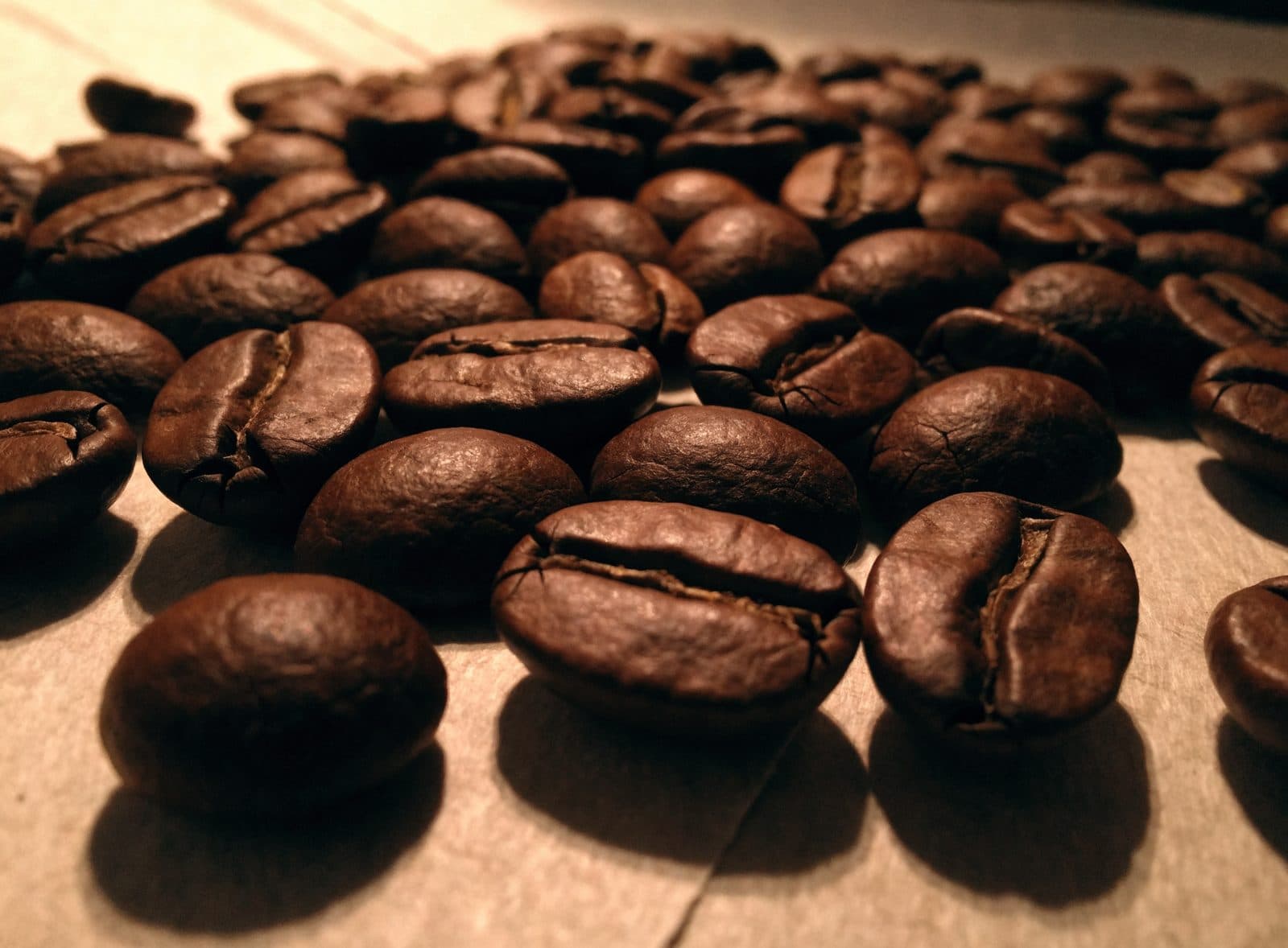
Illustration — not a named farm.
Field guide
What “peaberry” actually means on a Kona label
Peaberry is a bean shape. Hawaii’s rules call it Type II: one oval bean in the cherry instead of two flat-sided beans.
Peaberry is a bean shape. Hawaii’s rules call it Type II: one oval bean in the cherry instead of two flat-sided beans. It is not a secret rank above Extra Fancy, and it does not rescue a blend.
One bean, not a slogan
Most coffee cherries grow two seeds, pressed together, each with one flat face. Hawaii Administrative Rules chapter 4-143 call that a Type I bean: “produced two to a cherry” and “perceptively flat on one side and convex on the other.”
Sometimes a cherry grows a single seed. That seed is rounder. The same chapter names it a Type II bean: “produced one to a cherry,” “generally oval in shape and round in diameter,” “also referred to as peaberry.”
The word on a Kona bag is doing sorting work. It tells you which seed shape was kept in the lot. It is not a tasting-note guarantee, and it is not a farm name.
How Hawaii grades it
Type II lots still get the same grade names you already know, with their own size screens (HAR 4-143-6):
- Extra Fancy (Type II): at least size 13, no more than eight full imperfections per 300 grams.
- Fancy (Type II): at least size 12, no more than twelve.
- No. 1 (Type II): at least size 10, no more than eighteen.
Those lots are supposed to be one type. A few percent of the other shape is allowed (three percent by weight). Moisture still has to sit between nine and twelve percent. Coffee that meets the rule and grew in Kona may be labeled Kona Extra Fancy, Kona Fancy, or Kona No. 1. The geographic name still has to be true.
Size here is a screen, not a flavor score. Type II size 13 is not “bigger than Extra Fancy Type I.” The two types use different holes: Type I through a round hole, Type II through a slotted hole. A ten percent undersize allowance is built into the sizing rule. That is mill language. It is not a cup score.
What peaberry is not
It is not Extra Fancy plus one. A bag can say Peaberry and still be Fancy or No. 1. Read the grade words that are actually printed.
It is not a cup profile. People tell stories about denser beans and brighter cups. That is folklore until you brew the bag in front of you. Origin, roast date, and whether it is 100% still do more work than the shape.
It is not a blend-fixer. Peaberry printed on a 10% Kona coffee blend describes, at best, the Kona fraction. Same literacy test as every other grade word: start with “100% Kona Coffee.”
It is not a farm. If there is no estate or mill you can look up, you still have a brand, even if the beans are round.
Still read the bag in order
- Identity line: “100% Kona Coffee,” or stop.
- Farm, estate, or mill you can actually look up.
- Roast date, not only a best-by from next year.
- Grade words last, including Peaberry.
- Price as a smell test. Genuine 100% Kona on farm sites commonly $30-$60+/lb.
The rest of that walk is in How to read a Kona bag. This page is only the peaberry line.
FAQ
- Is peaberry better than Extra Fancy?
- No. Extra Fancy is a Type I grade people reach for. Peaberry is a Type II shape that can be graded Extra Fancy, Fancy, or No. 1 on its own track. Sorting, not a medal.
- Does “Kona peaberry” mean 100% Kona?
- Only if the identity line says 100% Kona Coffee. Peaberry is the seed shape. Origin is a different sentence.
- Should I pay more because it says peaberry?
- Pay for 100% Kona from a named farm with a roast date. If the peaberry lot also costs more, that is a price, not proof. Cheap “Kona peaberry” with blend language is still a blend.
- Where is this in the rules?
- Type I and Type II (peaberry) are defined in HAR §4-143-3. Green-coffee grades and Type II sizes 13 / 12 / 10 are in HAR §4-143-6.