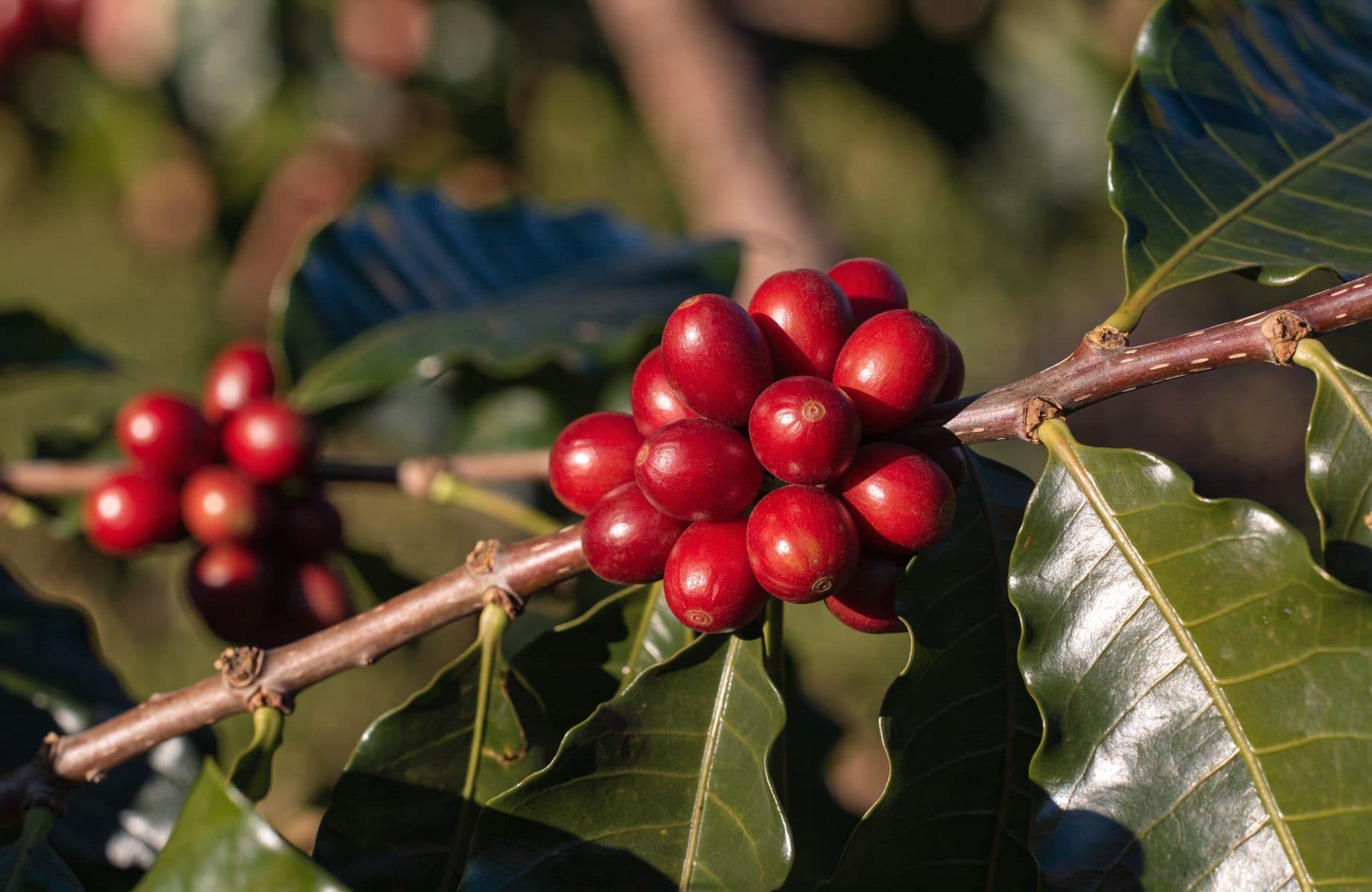
Illustration: not a named farm.
Field guide
What Kona actually means
Kona is a west-side district and a cup, not a roast style.
Kona is a place, not a roast
Kona sits on the west side of Hawaiʻi Island, the one people still call the Big Island. North Kona and South Kona face the afternoon sun. They sit on the leeward slopes of Hualālai and Mauna Loa, out of the worst of the trade winds that hit the other side of the island. Coffee that can honestly wear the name grows in a narrow belt on those slopes. Farms stack along that strip, a few hundred to a few thousand feet up, depending on the lot. It is small by world coffee standards. Drive it and you feel how short the real map is. That size is part of why a real bag costs what it costs.
The west-side belt
Elevation matters because the weather on that belt is not the weather at the beach. Mornings can run bright. Clouds and rain often move in later. Nights cool off. Cherries take their time. None of that is a slogan you can roast into a cheaper bean from somewhere else. You either grew it on that west-side slope or you did not. More: What elevation on a Kona bag actually tells you.
What the cup is actually like
Typical 100% Kona, when it is the real thing and not a dark-roast costume, is mild and sweet. Clean. People who had it on-island remember that more than they remember a tasting wheel. Chocolate, nut, a little fruit, a finish that does not pick a fight. Light and medium roasts keep more of that sweetness and lift. Darker roasts push chocolate and body. Roast still changes the cup. It does not create the origin. If your “Kona” only tastes like a dark roast, you may be tasting the roast, the blend, or both.
Tells that are not origin
“Kona roast” and “Kona-style” are not origin claims. They are not legal stand-ins for the district. They sit closer to “French roast” than to a farm name. A bag can say those words and contain no Kona at all.
Look past the style language. These are not the same claim as 100% Kona Coffee:
- “Kona roast” / “Kona-style” — roast or marketing language. Useful for color, useless for place.
- “Kona blend,” “Kona coffee blend,” “contains Kona,” a huge KONA and a tiny percent in the corner — a blend that rented the name.
- A big volcanic photo with no identity line — scenery, not origin.
- “Hawaiian” / “Hawaii blend” — not a synonym for the west-side district.
Look for the words “100% Kona Coffee,” a farm or estate you can actually name, and a price that looks like farm coffee instead of a grocery special. Genuine 100% Kona on farm sites commonly sits in the $30–$60+/lb range people see when they shop direct. A cheap “Kona” bag is usually a blend. We will not pretend a cheap supermarket pouch is the same crop.
Hawaiian is not a synonym for Kona
Hawaiian is not a synonym for Kona either. Coffee grows in Kaʻū on the same island, on Maui, on Kauaʻi, and in other Hawaiʻi districts. Those are real farms and real cups. They are not Kona. If you loved a cup at a hotel or a south-shore cafe, ask what was in it. A lot of “Hawaii coffee” on a menu is a blend, another island, or a roast name borrowed for the postcard. More on that split: Kona vs the rest of Hawaiʻi.
The label rule
The law around the word is not a vibe. It is a label rule. Until 30 June 2027, a blend can use a Hawaiʻi geographic name with as little as 10% of that origin in the bag (HRS §486-120.6 / Act 198). From 1 July 2027, if the name is used, the floor rises to 51% by weight. Blend percentage already has to be disclosed. The identity statement is supposed to tell you the percent and the name (Kona coffee blend, and what else is in it).
Read the front of the bag. If it says 10% Kona coffee blend, believe it. Nine tenths of what you brewed did not grow in Kona. It might be a fine cup of something else. It is not a Kona cup.
The cleanest read is still the blunt one. If it does not say 100% Kona Coffee, you are not buying a Kona bag. You are buying a blend that rented the name.
This site exists because that rental is still profitable. Island Coffee Bar is the Hawaii coffee guide — real Kona, a better brew, no 10% blend. We are not a roast color. We write so you can tell the district from the costume.
If you want a bag
Start with 100% Kona from a named estate. Taste the west side. Then decide if you even like it.
- Identity line: “100% Kona Coffee.”
- A farm, estate, or mill you can actually look up on the west side of Hawaiʻi Island.
- A roast date, not only a best-by stamp from next year.
- Price in the farm-site smell test: commonly $30–$60+/lb when people buy direct. If the price looks like supermarket coffee and the word looks like a postcard, believe the price.
Plenty of people like the west-side cup. Plenty of people also like Kaʻū or Maui better once they stop using Kona as a catch-all. That is a fair outcome. Origin is a place. Your palate is yours.
The bag walkthrough is How to read a Kona bag. Next: 100% Kona vs the blend — what the bag is allowed to say, and why 10% still fools people.
FAQ
- Is Kona a roast?
- No. People use Kona like it is a roast — dark, smooth, “Kona-style.” Kona is a place. The cup comes from that place. “Kona roast” and “Kona-style” sit closer to “French roast” than to a farm name. A bag can say those words and contain no Kona at all.
- Where does Kona coffee actually grow?
- On the west side of Hawaiʻi Island (the Big Island), in North Kona and South Kona, on the leeward slopes of Hualālai and Mauna Loa. Coffee that can honestly wear the name grows in a narrow belt on those slopes, a few hundred to a few thousand feet up depending on the lot.
- What does 100% Kona usually taste like?
- Mild and sweet. Clean. Chocolate, nut, a little fruit, a finish that does not pick a fight. Light and medium roasts keep more of that sweetness and lift. Darker roasts push chocolate and body. Roast still changes the cup. It does not create the origin.
- Is Hawaiian coffee the same as Kona?
- No. Coffee grows in Kaʻū on the same island, on Maui, on Kauaʻi, and in other Hawaiʻi districts. Those are real farms and real cups. They are not Kona.
- Can a blend still say Kona?
- Until 30 June 2027, a blend can use a Hawaiʻi geographic name with as little as 10% of that origin (HRS §486-120.6 / Act 198). From 1 July 2027 the floor rises to 51% by weight if the name is used. If it does not say 100% Kona Coffee, you are not buying a Kona bag. If it says 10% Kona coffee blend, nine tenths did not grow in Kona.