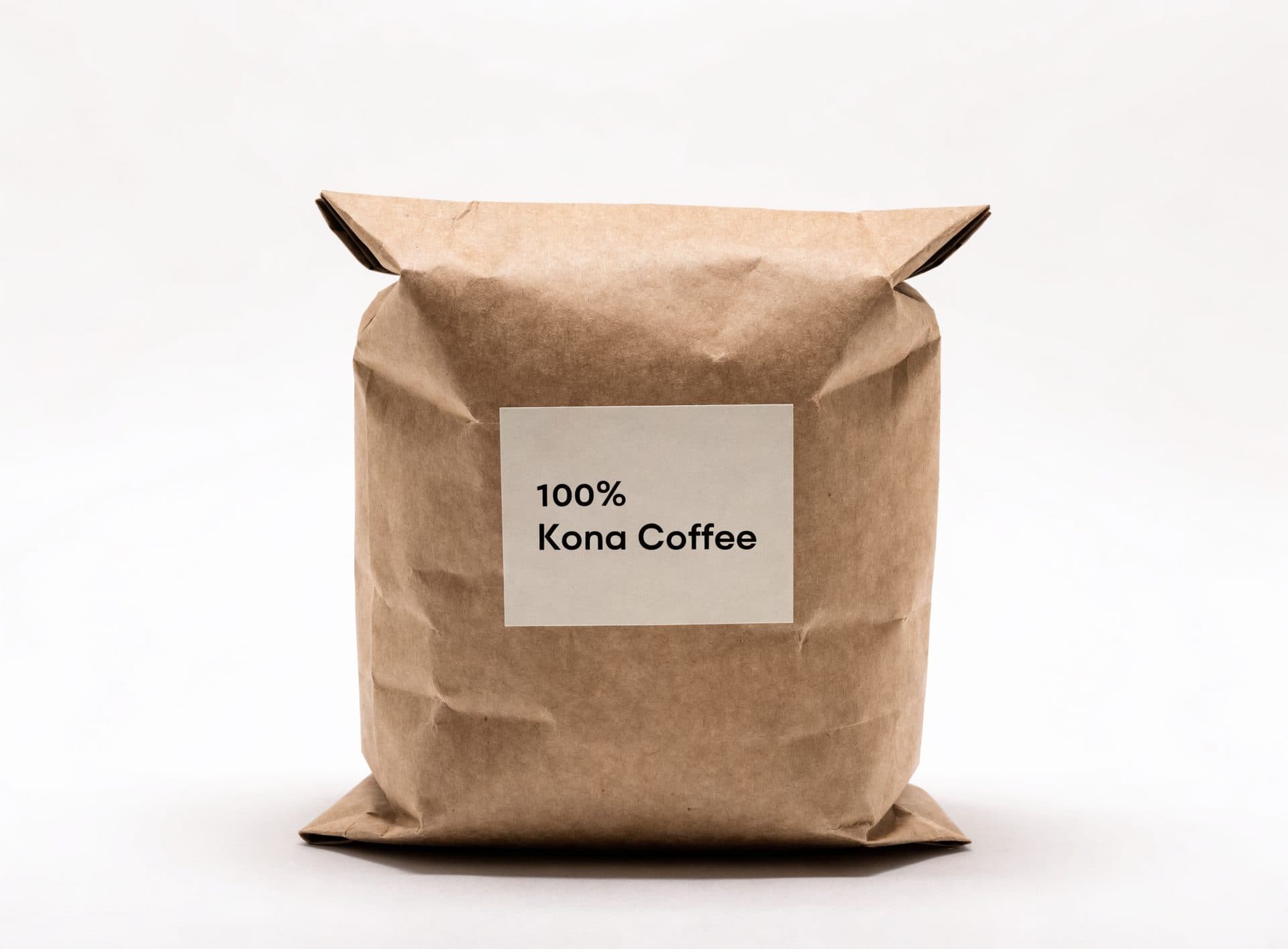
Illustration: not a named farm.
Field guide
Roast date vs “best by” on a Hawaii coffee bag
Roast date is when the coffee became coffee you can brew. Best-by is a warehouse horizon.
Roast date is when the coffee became coffee you can brew. Best-by is when a warehouse is willing to keep selling it. On a Hawaiʻi bag, those two clocks do different jobs. If you only have a best-by from next winter, you are guessing about freshness.
Two different clocks
A roast date is a day on a calendar. The beans left the roaster. From that day, the bag starts aging in real time: aroma, sweetness, and the mild cup people buy Kona for.
A best-by (or “best if used by”) is a shelf horizon. It is often set for warehouse and retail logistics, not for the cup you remember from a west-side farm. Coffee is not canned peaches. A mild, sweet washed Kona goes quiet when it is old. A year-out best-by does not prove the roast was last week.
Neither date rescues a blend. Read “100% Kona Coffee” first. Then look for who roasted it. Then look for the roast date.
Why supermarket bags hide behind best-by
Grocery and gift-shop “Kona” is often a private label. The brand may sit three steps away from the roaster. A best-by is easier to print than a roast day the chain does not want to own.
That does not make every supermarket bag a scandal. It does mean the front of the tin can look like a vacation while the only date on it is a warehouse horizon. If the shelf price looks like breakfast blend and the only date is next winter, believe the shelf. Supermarket “Kona” is frequently a blend — as little as 10% through 30 June 2027 under HRS §486-120.6 / Act 198. From 1 July 2027, using a Hawaiʻi geographic name means at least 51% from that origin. Percentage disclosure is already required. The tiny line on the front still does more work than the volcano photo.
Farm sites and named Hawaiʻi roasters more often print the day the lot came off the roaster. That is the tell this page is about. Genuine 100% Kona on farm sites commonly shows up around $30–$60+/lb — the range people see when they buy direct, not a certified floor.
What a roast date is telling you
It tells you when the coffee became brewable coffee. Fresh enough to smell like coffee when you open it. Not so old that the bag is a souvenir.
It does not tell you:
- That the beans are Extra Fancy (that is a green-coffee grade word).
- That the bag is 100% Kona (that is the identity line).
- That you will like the roast (that is the cup). More: What light, medium and dark roast mean on a 100% Kona bag.
Who roasted it matters for the same reason the date does. Farm-roasted or a named Hawaiʻi roaster is a clearer chain than an unsigned private label. Details on that split live in Farm-direct vs the supermarket bag. On the bag in your hand, just ask: does anyone take care of this roast in public?
We are not inventing a “drink within N days” window. Drafts do not lock one. Smell the bag. If it smells tired and the only date is a best-by a year out, you are paying Kona rent on stale inventory — or on a blend that was never Kona in the first place.
Still read the bag in order
- Identity line — “100% Kona Coffee,” or stop.
- Farm, estate, or mill you can actually look up.
- Roast date, not only a best-by from next year.
- Grade words last (Extra Fancy, Fancy, No. 1, Peaberry). Sorting, not flavor.
- Price as a smell test. Genuine 100% Kona on farm sites commonly $30–$60+/lb.
The full literacy walk is How to read a Kona bag. This page is only the date line. More: Whole bean vs ground for a 100% Kona bag and How to store an opened bag of 100% Kona.
FAQ
- Is best-by the same as roast date?
- No. Roast date is when it came off the roaster. Best-by is a warehouse horizon. For a nice washed Kona, you want the roast date.
- What if there is only a best-by?
- You do not know when it was roasted. That is a weaker paper trail. Still require the 100% line. Cheap “Kona” with a year-out best-by is usually a blend story, not a freshness story.
- How fresh is “fresh enough”?
- We do not invent a day count. Fresh enough to smell like coffee when you open it. Not so old that the bag is a souvenir.
- Does a roast date mean 100% Kona?
- No. Origin is a different sentence. Start with “100% Kona Coffee.”