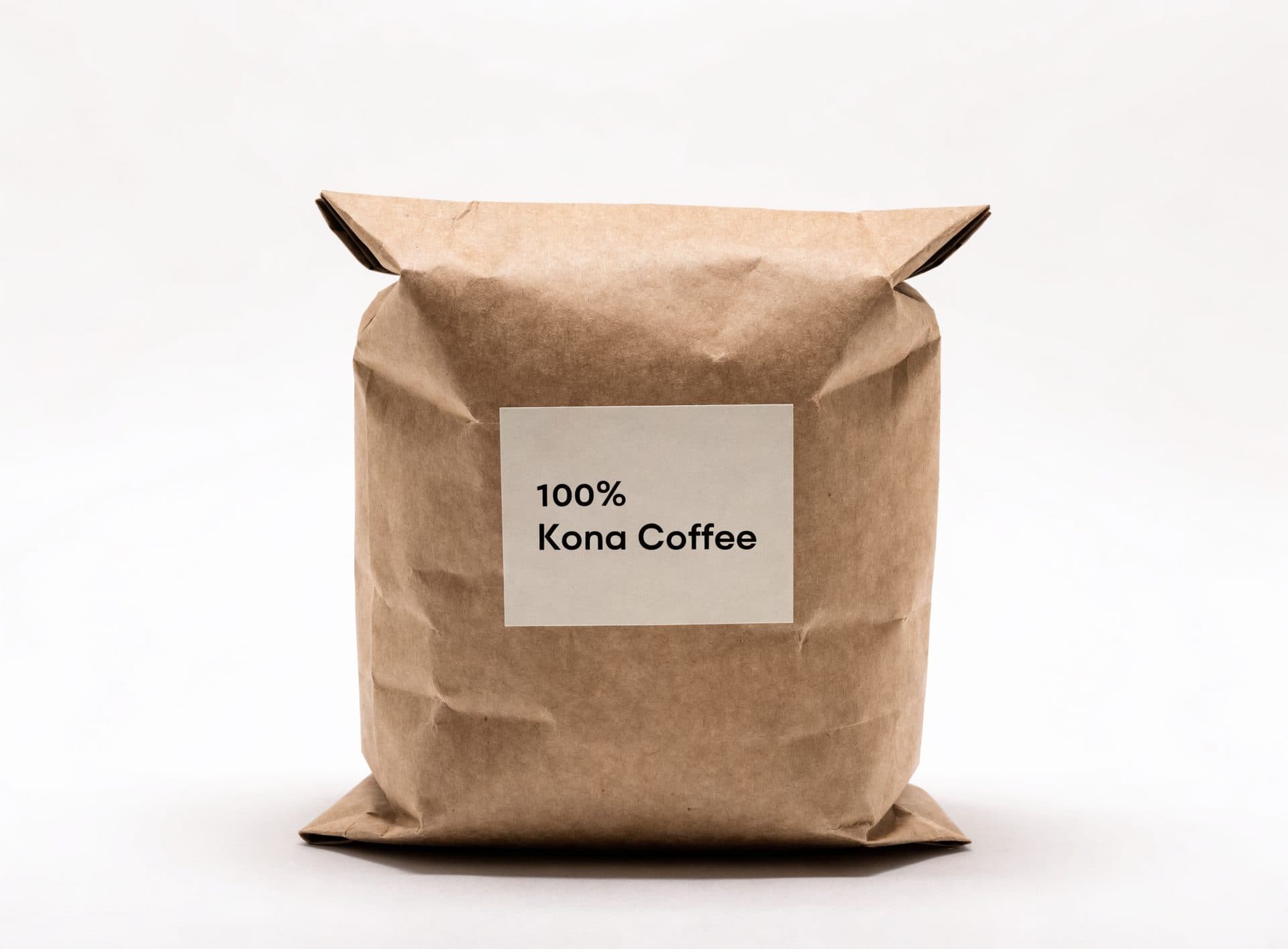
Illustration: not a named farm.
Field guide
How to store an opened bag of 100% Kona
Keep an opened bag of 100% Kona whole bean, sealed tight, and somewhere cool and dark. Skip the refrigerator.
Keep an opened bag of 100% Kona whole bean, sealed tight, and somewhere cool and dark. Skip the refrigerator. Grind only what you are about to brew. That covers most of it. The rest of this page is the why, plus the small habits that keep a mild, sweet cup tasting like it did the morning you opened the bag.
Four things that flatten a bag
Roasted coffee fades from four directions: air, heat, light, and moisture. Air carries the aroma off and stales what is left. Heat speeds all of that up. Light does the same, which is why a clear jar on a sunny counter looks nice and works against you. Moisture is its own problem: damp beans pick up off smells and lose their snap.
A mild washed Kona shows that fade sooner than a heavy dark roast, because there is less roast bitterness to cover for it. The chocolate, the nut, the little bit of fruit: those are the first things to go quiet.
Genuine 100% Kona on farm sites commonly runs $30-$60+/lb. Storage is how you keep what you paid for.
Start with the bag it came in
Many farm bags are built for this job. If yours has a zip seal, use it. Press the air out before you close it, roll the top down, and clip it if the zip is weak. A small one-way valve lets gas from freshly roasted coffee out without letting air back in. It is a packaging detail, not a freshness guarantee.
If the bag has no reseal, or it tore when you opened it, move the beans to an airtight container. Opaque beats clear. Smaller beats bigger as the bag empties, because a half-empty canister is mostly air.
Keep the original bag or snap a photo of the label before you toss it. The identity line, the farm, and the roast date are worth having on hand. More on those: How to read a Kona bag and Roast date vs best by.
Where the bag lives in your kitchen
A closed cupboard away from the stove, the oven, the dishwasher, and the sunny window. Not on top of the fridge, where the motor runs warm. Not next to the rice cooker that steams every night.
Many island kitchens run warm and humid for much of the year. That makes the cool, dark cupboard matter more, not less. If one spot in the kitchen stays the coolest and darkest, that is where the coffee goes.
Skip the fridge
The refrigerator is humid and full of smells, and coffee picks up both. Every time a cold bag comes out into a warm kitchen, moisture can form on the beans. That is the opposite of what you want. Keep the working bag in the cupboard.
The freezer, if the bag will sit
Freezing is a choice some people make for a bag they will not finish soon. If you do:
- Split the beans into sealed portions, each about what you will use before it needs to come back out.
- Freeze those portions sealed.
- Thaw a portion sealed, on the counter, before you open it, so moisture does not form on cold beans.
- Do not refreeze a portion once it is thawed.
The bag you are drinking from this week stays out of the freezer. The freezer is for the extra, not the daily bag.
Keep it whole until you brew
Whole bean holds its aroma longer, because most of the coffee is still sealed inside the bean. Grinding the whole bag on Sunday turns good storage into pre-ground with extra steps. Grind right before you brew, on burrs. More: Whole bean vs ground and The grinder that doesn’t wreck the bag.
If you already have pre-ground 100% Kona, the same storage rules apply, only tighter. Pre-ground is a compromise you can live with for a week if the roast date is honest and the bag is sealed well. After that you are drinking leftover aroma.
The easiest storage habit of all is buying a bag size you will actually finish. A smaller bag, opened and finished, beats a big bag that sits.
How to tell the bag is fading
Bags, roasts, and kitchens are all different, so trust your nose and the cup over a calendar:
- Open the bag. If the smell is faint, or smells like cardboard, the aroma is on its way out.
- Brew a pour-over. Fresh coffee puffs up when hot water hits it. Older coffee barely moves.
- Taste. A thin, papery, hollow cup from a bag that used to taste sweet usually means the bag, not the brewer.
A fading bag is still coffee. It just is not the cup you paid farm prices for. Brew it, finish it, and start the next one with better habits.
The short version
- Keep it whole bean.
- Press the air out and seal it, in the original bag or an opaque airtight container.
- Cupboard: cool, dark, away from heat and steam.
- No fridge.
- Freezer only for extra, in sealed portions. Thaw sealed. Do not refreeze.
- Grind right before you brew.
If you want a bag, start with 100% Kona from a named estate, buy a size you will finish, and keep it sealed in a cool, dark cupboard.
FAQ
- Should I keep opened Kona in the fridge?
- No. The fridge is humid and full of smells, and coffee picks up both. Keep it sealed in a cool, dark cupboard.
- Can I freeze 100% Kona?
- Some people freeze a bag they will not finish soon. If you do, freeze sealed portions, thaw each one sealed before opening, and do not refreeze.
- Is a glass jar on the counter fine?
- Only if it is airtight, opaque, and away from the sun and the stove. A clear jar in a bright window works against the coffee.
- How long does an opened bag last?
- It depends on the bag, the roast, and your kitchen. Smell the bag and taste the cup. Keep it whole, sealed, cool, and dark, and buy a size you will finish.
- Does good storage fix a blend?
- No. Storage keeps a good bag good. It does not change the percent. Look for “100% Kona Coffee” first.