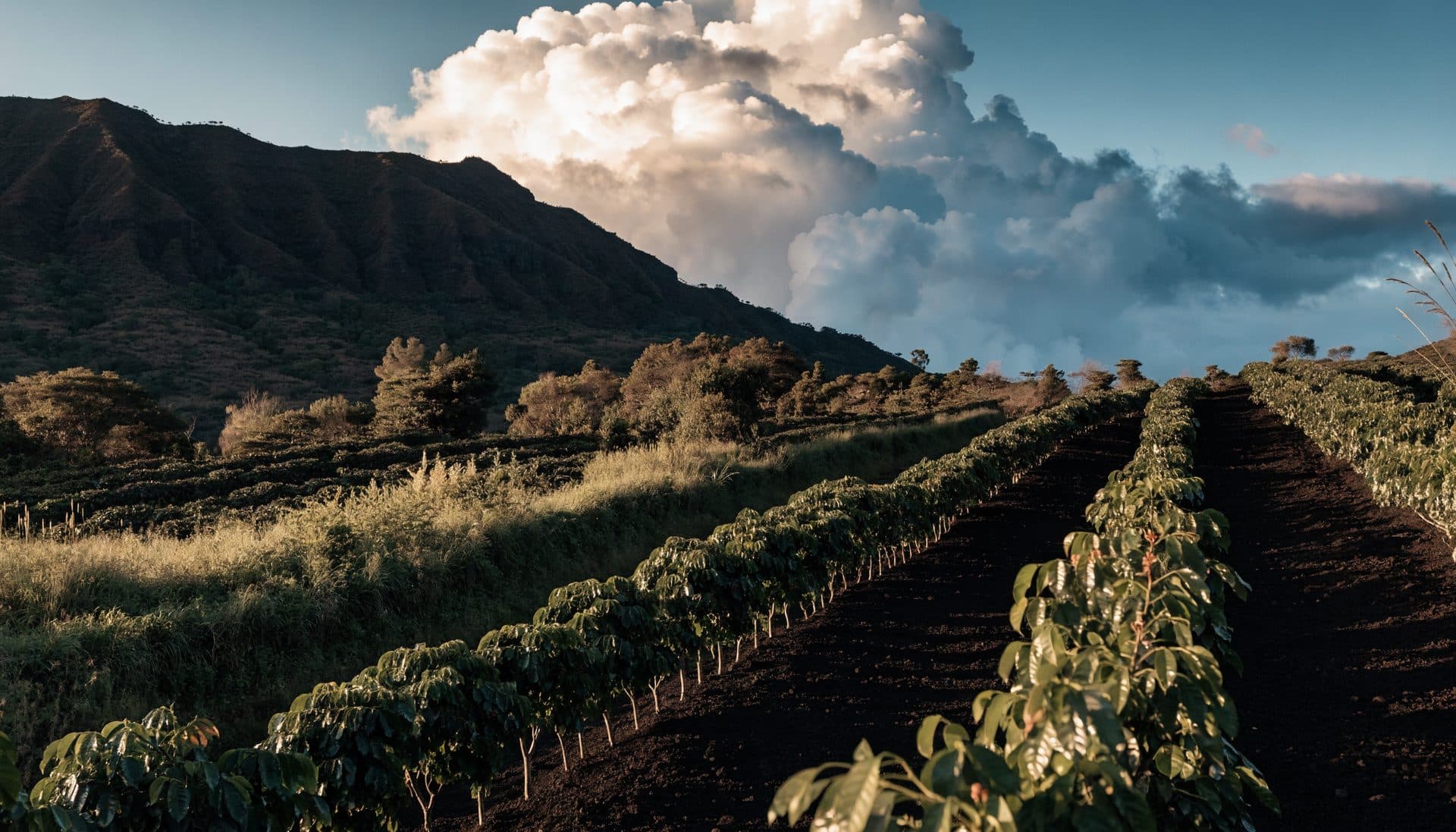
Illustration: not a named farm.
Field guide
Farm-direct vs the supermarket bag
Roast date, who roasted it, supermarket blend risk.
What farm-direct usually looks like
Farm-direct usually looks like this. A farm site or a named Hawaiʻi roaster. A 100% line. A roast date. A shipping estimate that is not overnight magic. You wait a few days. You open a bag that still smells like coffee. That wait is the point, not a bug.
Side by side, the tells:
- Farm-direct: a farm site or named Hawaiʻi roaster; a 100% line; the day it came off the roaster; you wait a few days.
- Supermarket bag: convenient tonight; often a private label; often a best-by horizon from next winter; the word Kona doing the most work for the least coffee.
Who roasted it, and when
Start with who roasted it. A farm or a named Hawaiʻi roaster has to live with the bag. A supermarket private label can hide behind a brand, a distributor, and a best-by date from next winter. Roast date is the simple tell. Direct bags often print the day it came off the roaster. Grocery bags often print a horizon. Coffee is not canned peaches. A mild, sweet Kona goes quiet when it is old. If you cannot tell when it was roasted, you are guessing with expensive beans, or with a blend that was never expensive in the first place. The two clocks: Roast date vs “best by” on a Hawaii coffee bag.
On the bag in your hand, just ask: does anyone take care of this roast in public? The literacy walkthrough is How to read a Kona bag.
The identity line on the shelf
Then read the identity line. Look for “100% Kona Coffee.” Supermarket “Kona” is frequently a blend. Until 30 June 2027, that blend can be 10% Kona (HRS §486-120.6 / Act 198). From 1 July 2027, using the geographic name means at least 51% from that origin. Percentage disclosure is already required, so the tiny line on the front is doing more honest work than the volcano photo. If it says 10% Kona coffee blend, believe it. Nine tenths did not grow in Kona.
If the shelf price looks like breakfast blend, believe the shelf. Genuine 100% Kona on farm sites commonly shows up around $30–$60+/lb, the range people see when they buy direct. Cheap “Kona” is usually a blend. That is not a morality play about grocery stores. It is how the word gets used in that aisle.
“Kona-style” and “Kona roast” are not origin claims. Hawaiian blend is not Kona either. If you wanted Kona and the tin says Hawaiian, you are in the wrong aisle.
Direct is not automatically saintly
Farm-direct is not automatically saintly. Farms can roast too dark for your taste. They can ship slow. They can sell out. They can use “estate” as a farm word that is not an HDOA grade. You still check 100%, the name, the roast date, and whether you like the cup. Direct just gives you a shorter story. This lot, this roast, this west-side farm (or this Kaʻū or Maui or Kauaʻi farm, if that is what you actually ordered). Hawaiian blend on a supermarket tin is a long story with missing pages.
Gifts make the split obvious
Gifts make the split obvious. A supermarket Kona tin looks like a souvenir and often drinks like one. A 100% bag from a named estate looks like you paid attention. Mail whole bean if you can. Tell them to use a burr grinder. If they only have a blade, you already know the limit. The coffee can still be honest even if the grind is not. A bag with a farm name on it is a complete present. Do not gift a club unless you know they want one.
The three-step rule
If you want a bag, start with 100% Kona from a named estate, bought from the people who roasted it.
- 100% first. Look for “100% Kona Coffee.”
- Named estate second. A person who will put their name on the lot.
- Roast date third. The day it came off the roaster, not a best-by horizon.
Use the supermarket when you need coffee tonight and you can live with what the label actually says. Read the percent. Then brew what you bought, not what the front of the bag wished you bought.
Some farms and Hawaiʻi roasters sell straight from their own sites. Examples that may sit on future affiliate rails include Hula Daddy, Koa Coffee, Big Island Coffee Roasters, and Hawaii Coffee Company. Amazon sells grinders, kettles, and scales as gear, not a shortcut around the label. Grocery-style coffee there gets the same test as the supermarket. No live enrollments yet. The rule does not depend on a cookie. 100% first. Named estate second. Roast date third.
Not a resort counter
Island Coffee Bar is not Disney’s Polynesian Village Resort (Kona Island is the official 2026 name for the morning coffee and pastry counter, later grab-and-go sushi; Kona Cafe is the separate table-service restaurant), not Joffrey’s, and not the counter fan sites still call Kona Island Coffee Bar.
If the grind is still a propeller, read The grinder that doesn’t wreck the bag. If you are still in the aisle, How to read a Kona bag is the literacy test.
FAQ
- Why bother with farm-direct if the supermarket is easier?
- The supermarket is convenient. That is its whole argument. Farm-direct is slower, and you get a roast date and a person who will put their name on the lot. If you want the cup you had on-island, that trade is usually worth it.
- How do I tell grocery Kona from the real bag?
- Look for “100% Kona Coffee,” a roast date, and a name. Grocery bags often print a best-by horizon. Supermarket “Kona” is frequently a blend — as little as 10% through 30 June 2027 (HRS §486-120.6 / Act 198). If the shelf price looks like breakfast blend, believe the shelf.
- Is farm-direct always better coffee?
- No. Farms can roast too dark for your taste. They can ship slow. They can sell out. You still check 100%, the name, the roast date, and whether you like the cup. Direct just gives you a shorter story.
- Is Island Coffee Bar the Disney Polynesian coffee counter?
- No. Island Coffee Bar is not Disney’s Polynesian Village Resort (Kona Island / Kona Cafe), not Joffrey’s, and not the counter fan sites still call Kona Island Coffee Bar.
- Can I buy Kona on Amazon instead of a farm site?
- Amazon sells grinders, kettles, and scales as gear, not a shortcut around the label. Grocery-style coffee there gets the same test as the supermarket. 100% first. Named estate second. Roast date third. No live enrollments yet.