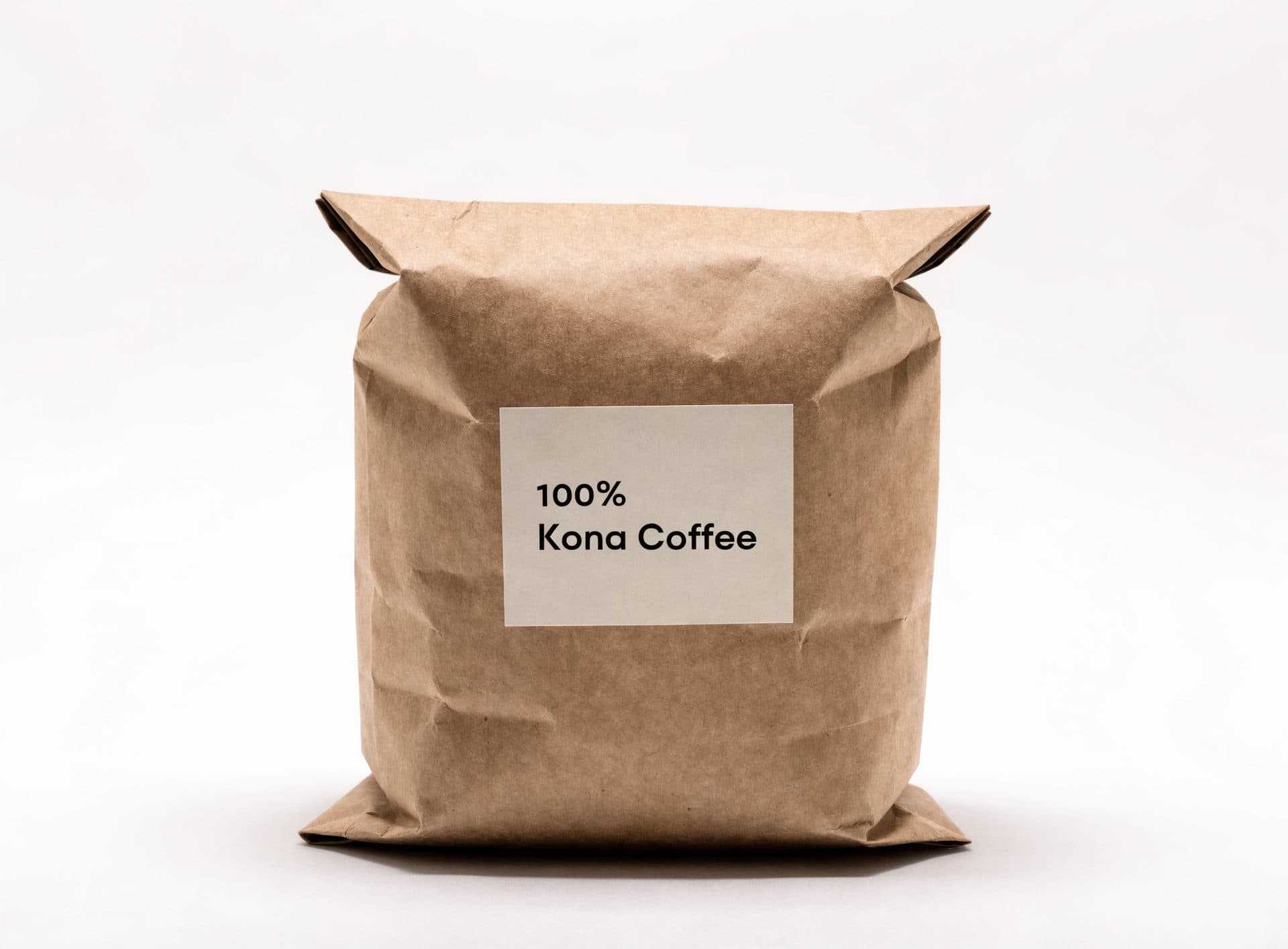
Illustration: not a named farm.
Field guide
What "estate" or "single estate" means on a 100% Kona bag
Turn over a bag of 100% Kona and you will often see the word "estate." Sometimes it is part of the farm's name, sometimes it is "single estate" or "estate grown." In plain terms, it is pointing you to a farm: the place the coffee came from.
Turn over a bag of 100% Kona and you will often see the word "estate." Sometimes it is part of the farm's name, sometimes it is "single estate" or "estate grown." In plain terms, it is pointing you to a farm: the place the coffee came from.
That is useful. It is also less than it sounds like. Here is how to read it.
Read the bag in order: "100% Kona Coffee" first, a named estate second, then the roast date. Bag literacy: How to read a Kona bag.
Estate is a farm word, not a grade
On Kona bags, "estate" is a common farm word. It is not a Hawaiʻi Department of Agriculture grade. The HDOA grades you may see, like Extra Fancy, Fancy, No. 1 and Peaberry, sort beans by size and defects. "Estate" sits outside that system.
So "estate" on its own does not mean Extra Fancy, does not mean a better cup, and does not tell you the roast. It usually means this is the farm's own coffee, sometimes a mix of that farm's sorted lots. More on grades: What peaberry means.
Single estate
"Single estate" is a seller's way of saying the coffee in the bag came from one farm, not several farms put together.
Treat it as the farm's or roaster's own description. Different sellers use the word a little differently, so if it matters to you, read the farm's site or ask.
Example (made-up bag, not a real farm):
- Front: "Example Ridge Estate, 100% Kona Coffee, single estate, medium roast"
- What it tells you: one named farm, 100% Kona, a medium roast.
- What to check next: the roast date, and whether "Example Ridge Estate" is a real farm you can look up on the west side of Hawaiʻi Island.
Estate grown, estate roasted
You may also see:
- Estate grown: the farm on the label grew the coffee.
- Estate roasted or roasted on the farm: the farm roasted it too, instead of selling green beans to a separate roaster.
Both are the seller's own words. They can tell you how short the trip was from tree to bag, which often means fewer hands and a clearer story. They still do not tell you the cup. More on buying from the people who grew and roasted it: Farm-direct vs the supermarket bag.
Estate does not replace "100% Kona Coffee"
This is the one to remember. A farm name and the word "estate" can sit on a blend.
Until 30 June 2027, a blend can use a Hawaiʻi geographic name with as little as 10% of that origin (HRS §486-120.6 / Act 198). From 1 July 2027 the floor is 51% if the name is used. A pretty estate story on a 10% blend is still a 10% blend.
So read the identity line first. If it does not say "100% Kona Coffee," the estate word does not change that. More: 100% Kona vs the blend.
Example (made-up bag, not a real farm):
- Front: "Example Valley Estate Kona Blend"
- Back, small print: "10% Kona coffee"
- What it tells you: a blend with a farm-sounding name. Not 100% Kona.
How to check an estate name
An example way to check, not a rule:
- Find "100% Kona Coffee" on the bag.
- Find the farm or estate name.
- Look the name up. You should find a real farm on the west side of Hawaiʻi Island, or a mill that is clear about which lots it used.
- Find a roast date you can read. More: Roast date vs best by.
- Then pick the roast you like. More: Light, medium and dark roast.
The short version
- "Estate" points to a farm. It is not an HDOA grade.
- "Single estate" usually means one farm, in the seller's own words.
- "Estate grown" and "estate roasted" tell you who grew and who roasted.
- None of them replace the words "100% Kona Coffee."
- Look the name up, then check the roast date.
FAQ
- Does "estate" mean Extra Fancy?
- No. "Estate" is a farm word. Extra Fancy is an HDOA grade that sorts beans. A bag can show both, one, or neither.
- Is single estate better than coffee from several farms?
- Not by itself. It tells you where the coffee came from. Whether you like it is still up to the cup.
- Can a blend say "estate"?
- A farm-sounding name can appear on a blend. That is why "100% Kona Coffee" comes first.
- Does estate tell me the roast?
- No. Look for the roast level and the roast date separately.